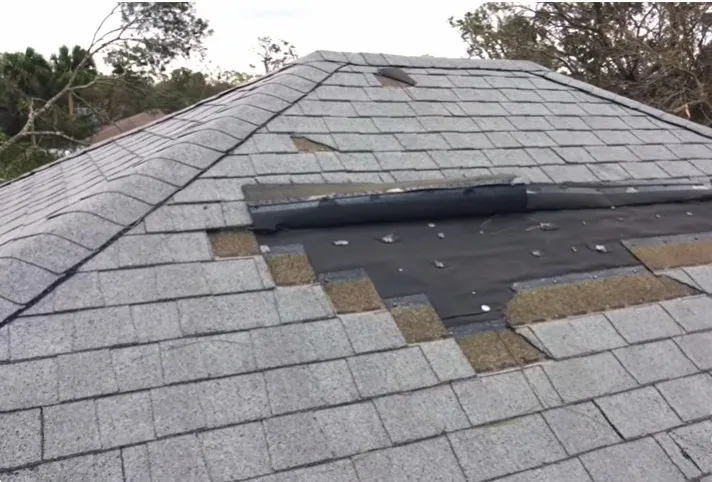
Here’s the thing about hurricane damage: the worst of it doesn’t always show up the day after the storm. When Milton came through, we saw the obvious stuff — shingles scattered across yards in Summerfield, ridge vents peeled back in Boyette, blue tarps going up all down Riverview Drive. But the calls kept coming for months afterward. A stain spreading across a bedroom ceiling in January. A soft spot in the decking nobody noticed until the next heavy rain. That’s how hurricane damage works. Wind lifts things just enough to break the seal, water finds its way in slow, and by the time you see it inside, the real damage is already done. So if your roof took a hit — last season or three seasons ago — don’t wait for the ceiling to tell you about it. One call and we’ll come look. (813) 471-5632, any hour.
What We Fix
Hurricane Roof Damage We Fix in Riverview, FL
Forget the dramatic photos of roofs peeled clean off. Most hurricane damage we fix in Riverview looks ordinary at first glance. Here’s what we find:
Shingles lifted or missing.
Wind doesn’t have to rip a shingle off to ruin it. It just has to lift the edge enough to break the adhesive seal. After that, every rain drives water underneath. You’ll see a few bare patches — or nothing at all from the ground.
Flashing torn loose.
The metal around chimneys, vents, and valleys takes a beating in high wind. Bent or missing flashing is one of the most common leak sources we find after a storm.
Ridge vents and caps damaged.
The highest point of your roof catches the most wind. Cracked or missing ridge caps let water straight into the attic.
Tile uplift.
Tile roofs handle Florida weather well, but hurricane gusts can lift individual tiles or crack them with flying debris. One broken tile is a direct path for water.
Metal panel damage.
Standing-seam holds up better than most, but debris dents panels and wind can work fasteners loose at the edges.
Flat roof membrane damage.
Ponding water, lifted seams, punctures from branches — flat and low-slope roofs take a different kind of punishment, and it hides well. See our flat roof repair guide for the low-slope details.
The leak you can’t find.
Sometimes everything looks fine from outside and water is still getting in. That’s when you need someone in the attic with a flashlight who knows where to look.
After the Storm
What to do in the first 48 hours after the storm
You’ve got enough to deal with. Here’s the short version, in order:
- Stay off the roof. Seriously. Wet shingles, loose debris, soft spots you can’t see — people get hurt doing their own inspections. Look from the ground with binoculars if you want, then call someone.
- Photograph everything. Before you touch a thing, walk the property and take pictures — the yard, the roofline from the ground, any debris, any water inside. Your insurance company will want this, and memories get fuzzy fast.
- Stop active water. Buckets under drips, move furniture and electronics, and if water is coming in through a big opening, a tarp over it buys you time. Don’t climb up in the wind to do it — call us and we’ll handle the tarping.
- Call your insurance company. Just to open the claim and get a claim number. You don’t need all the answers yet — you just need the clock started.
- Call us. (813) 471-5632. We’ll tarp it, document the damage properly for your claim, and tell you straight whether it’s a repair or a replacement. No pressure, no games.
Roof open to the sky right now?
Don’t wait for morning. We do emergency tarping across Riverview 24/7 — usually the same night you call. A proper tarp, secured right, keeps the next rain out of your living room while the permanent fix gets scheduled.
Insurance Claims
Dealing with the insurance claim
Nobody enjoys this part, so here’s the honest version:
Document first, clean second. Photos and video before anything gets moved or repaired — adjusters can’t pay for damage they can’t see evidence of. For the full process, see our guide on how to file a roof insurance claim in Florida.
Get your own inspection, not just theirs. The insurance adjuster works for the insurance company. Having a roofer’s documented inspection with photos gives you something to compare against, and it catches things a drive-by adjuster misses — lifted shingles, compromised flashing, soft decking.
Watch out for the door-knockers. After every big storm, out-of-town crews flood the neighborhood offering ‘free roofs.’ Some are fine. Plenty aren’t — no local office, gone by the time the warranty matters. Ask where their office is. Ours is at 10517 Riverview Dr, right here in Riverview, and we’re not going anywhere.
File sooner rather than later. Florida gives you time, but memories fade, evidence weathers away, and the next storm doesn’t wait. Open the claim, get the inspection done, and keep everything in writing.
Still not sure where to start? Read our guide on what to do after storm damage, then call us for storm damage roof repair — we’ll tarp it, document everything for your claim, and tell you straight what you’re dealing with.
Why Us
Why Riverview calls us after a hurricane
We’re not a storm-chasing crew that showed up after Milton. We’re the local roofers — based on Riverview Drive, working Riverview, Brandon, Valrico, Gibsonton, Apollo Beach, and Ruskin every day, storm or no storm. From emergency roof repair to hail damage restoration, when you call (813) 471-5632, you get someone who knows these neighborhoods, these roof types, and what Tampa Bay weather does to them. We pull Hillsborough County permits on every job, and we never ask you to sign your insurance claim over to us. We’re here 24/7 because storm damage doesn’t check the clock.
Before you call
Have these ready and we’ll move faster:
- Your address in Riverview (or Brandon, Valrico, Gibsonton, Apollo Beach, Ruskin)
- What you can see: missing shingles, leaks inside, tarp already up?
- Whether you’ve opened an insurance claim yet (claim number helps, not required)
- A safe time for us to come look — we’re 24/7, so whenever works for you
Where We Work
Service areas
Reviews
What neighbors say
“After Hurricane Milton I had water coming into my garage through the ceiling. Called Thursday evening. They were here Friday at 8 AM, tarped the whole section by noon, attended the insurance adjuster visit with me the following week, and had the permanent repair finished before the next rain. My out-of-pocket was just my deductible.”
— Marcus T., South Fork
“I got the Citizens letter in March telling me I had 30 days to replace my roof or lose coverage. I called four roofers. These guys came out the next morning, showed me exactly what Citizens’ inspector would flag, gave me a written price the same day, and had the new roof done before my 30-day deadline. Passed Citizens’ re-inspection on the first visit.”
— Linda K., Summerfield
“Two other roofers came out and neither of them went into the attic. This crew went up on the roof AND into the attic and found rotted decking over the garage that would have caused a serious problem within a year or two. They sent us photos from inside the attic before they closed it up. The price they quoted in writing was the price we paid. No surprises at the end.”
— Ray and Debra M., Panther Trace
Not ready to call yet? Read our reviews on our homepage first — then call (813) 471-5632 when you’re ready.
FAQs
Hurricane damage roof repair FAQs
How soon after a hurricane should I get my roof inspected?
As soon as it’s safe — ideally within days. Wind-lifted shingles and cracked flashing let water in with every rain, and the longer it goes, the worse (and more expensive) it gets. If you see missing shingles or water inside, don’t wait at all — call (813) 471-5632.
My roof looks fine from the ground. Could it still be damaged?
Yes, and this is the most common surprise we find. Broken seals, lifted flashing, and bruised shingles are invisible from the yard. If a hurricane passed through, an up-close inspection is the only way to know.
Will my homeowner’s insurance cover hurricane roof damage?
In most cases, yes — hurricane wind damage is typically a covered peril in Florida policies, subject to your hurricane deductible (which is often higher than your standard deductible). Document everything with photos and get a roofer’s inspection to support your claim.
Should I tarp the roof myself?
Only if you can do it safely from the ground or a low, stable ladder — and honestly, we’d rather you didn’t risk it. Improper tarps blow off in the next gust. We do emergency tarping 24/7 and secure it properly.
Repair or full replacement — how do I know?
It comes down to the extent of the damage and the age of the roof. A few missing shingles on a 5-year-old roof is a repair. Widespread lifting, multiple leaks, or a roof already near the end of its life usually means replacement makes more sense. See our roof replacement cost guide. We’ll tell you straight which one it is.
How long does hurricane roof repair take?
Most repairs are done in a day once scheduled. Full replacements typically take 1–3 days depending on size. After a major storm, scheduling gets tight everywhere — calling early gets you in line faster.
Do you help with the insurance paperwork?
We document everything — photos, damage reports, measurements — in the format adjusters expect, and we can meet your adjuster on-site. We don’t negotiate your claim for you, but we make sure the damage is properly on the record.
What does hurricane roof repair cost in Riverview?
It depends on the damage — a minor repair can run a few hundred dollars, while a full replacement is a bigger investment. After our inspection, you get a clear written scope before any work starts. No surprises.
We’re Here 24/7
Missing shingles, lifted flashing, leaks that show up months later — if a hurricane hit your roof, don’t wait for the ceiling to tell you about it. One call and we’ll come look.
24/7 Emergency Service · Inspections