What To Do After Storm Damage – Riverview FL
A storm just tore through Riverview and your roof took the hit. What you do in the next 48 hours decides whether your insurance claim goes smoothly — or becomes a months-long fight. Here’s the exact playbook, in order.
Short answer: stay safe and stay off the roof, document all damage with photos before touching anything, make temporary repairs (tarping) to stop further damage, then call your insurer to open a claim and get a professional roof inspection. Don’t sign anything with door-to-door contractors, and don’t start permanent repairs until the adjuster has seen the damage.
In This Guide
Safety First — Secure the Home
Before anything else, make sure the house is safe to be in:
- Stay off the roof. Storm-damaged roofs are unstable — wet decking, loose shingles, and hidden soft spots. Every year people get hurt climbing up to “take a look.”
- Check for sagging ceilings or active leaks near electrical fixtures. If you see either, treat that room as off-limits and kill power to the area if it’s safe to reach the breaker.
- Watch for downed lines and unstable trees or limbs before walking the yard.
- Move valuables away from active leaks and cover furniture with plastic sheeting.
⚠️ If there’s major structural damage or water pouring in near wiring, get out and call for help. A roof can wait; your family can’t.
Document Everything Before Cleanup
This is the single most important thing for your insurance claim. Document before you clean up or make repairs:
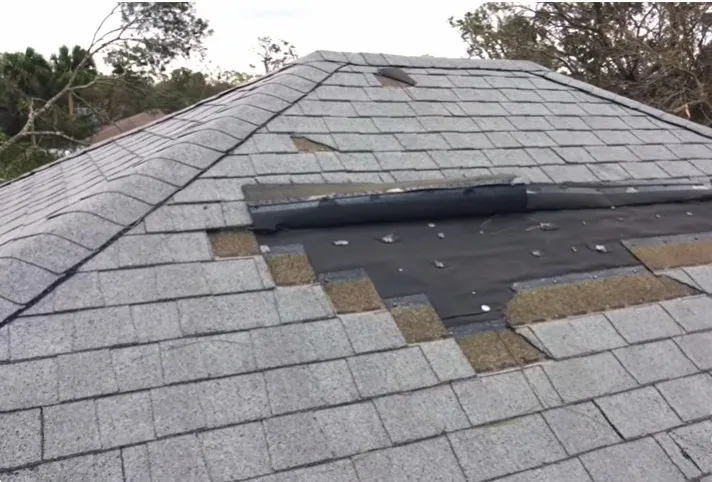
- Photos and video: wide shots of each roof slope from the ground, close-ups of missing shingles, dents, lifted flashing, and debris in the yard.
- Inside the house: every water stain, drip, and damaged belonging — open closets and the attic if you can do it safely.
- Keep fallen shingles and debris as physical evidence of the storm’s impact.
- Note dates and times: when the storm hit, when you discovered the damage, when you called the insurer. Write it down now — you won’t remember later.
💡 Tip: your phone’s photos are timestamped automatically. Take more than you think you need — wide, medium, and close-up of every damaged area, from multiple angles.
Stop Further Damage (Tarp & Mitigate)
Florida policies require you to take reasonable steps to prevent additional damage — and the insurer can reduce your payout if you don’t:
- Cover exposed areas with tarps or plastic sheeting; board broken windows.
- Place buckets and towels under active leaks; move possessions out of harm’s way.
- Save every receipt for tarps, lumber, and any materials you buy — your insurer reimburses reasonable temporary-repair costs.
- Don’t go overboard. Temporary repairs are part of your total settlement — if you pay a contractor a fortune for emergency tarping, there may be less left for the permanent fix. And never start permanent repairs until the adjuster has inspected.
Roof exposed after the storm?
We handle emergency tarping and full storm inspections across Riverview, Brandon, Valrico, Gibsonton, Apollo Beach, and Ruskin — 24/7.
📞 Call (813) 471-5632Call Your Insurer & Open a Claim
Call as soon as you’ve documented and stabilized — Florida gives you a limited window to report storm claims, so don’t sit on it:
- Report the damage and ask: Am I covered? Does this exceed my deductible? How long will processing take?
- Write down your claim number, the adjuster’s name, and the date/time of every call.
- Know your deductible before the adjuster arrives — Florida hurricane deductibles are often a percentage of the dwelling coverage, not a flat number.
- For the full claims walkthrough, see our guide: How to File a Roof Insurance Claim in Florida.
Get a Professional Storm Inspection
Wind damage isn’t always visible from the ground — lifted shingles, broken seals, and granule loss can hide in plain sight:
- A roofer’s inspection report with photos strengthens your claim and catches damage the adjuster might miss.
- Get it done promptly once conditions are safe — the longer you wait, the harder it is to prove the damage came from this storm.
- Don’t assume you need a full replacement. Localized damage on an otherwise healthy roof is often repairable; widespread damage or an aging roof may point to replacement. (Related: signs your roof needs replacing.)
- Hail? Florida hail leaves a different signature than wind — see hail damage roof repair in Riverview.
Beware Storm Chasers
After every big storm, out-of-area contractors go door-to-door pressuring homeowners into quick signings. Protect yourself by vetting a licensed roofer before you sign anything:
- Verify the license through the Florida DBPR website before anyone touches your roof.
- Never sign an Assignment of Benefits or any contract on the spot — take the paperwork, read it, and compare.
- Local and reachable beats fast and cheap. A Riverview contractor with a real address is still here when the warranty question comes up in two years.
- Get everything in writing: scope, materials, price, and timeline — before work starts.
Repair or Replace — The Decision
Once the adjuster and your roofer have both weighed in, the decision usually comes down to three factors:
- Extent of damage: a few missing shingles in one area → repair. Damage across multiple slopes → replacement is often the smarter money.
- Roof age: patching a 20-year-old shingle roof is throwing good money after bad — the surrounding shingles are near end-of-life anyway.
- Material choice: if you’re replacing, Florida’s heat and hurricanes reward the right material. See the best roofing materials for Florida heat and hurricanes.
Storm Damage FAQs
How soon after a storm should I get my roof inspected?
As soon as conditions are safe — especially if you see missing shingles, new leaks, or debris impacts. Fast documentation ties the damage to the storm, which is exactly what insurers want to see.
Can wind damage a roof without missing shingles?
Yes. Wind can lift shingles and break their seals without tearing them off, and granule loss accelerates aging even when nothing looks dramatic from the ground. A professional inspection catches what the eye misses.
Should I tarp the roof myself?
Only if you can do it safely from a ladder without walking the roof — and honestly, for most homeowners the safer move is calling a roofer for emergency tarping. Save the receipt either way; it’s reimbursable.
Will my insurer deny the claim if the roof was old?
Age alone doesn’t void coverage, but insurers do expect regular maintenance — neglect can lead to denials. Keep records of past repairs and inspections; they support your claim.
Can I start permanent repairs before the adjuster visits?
No — wait for the adjuster to document the damage first. Temporary mitigation (tarps, buckets) is required; permanent repairs before inspection can jeopardize your payout.
Storm damage in Riverview? Don’t wait.
Riverview FL Roofing Contractor — emergency tarping, storm inspections, and full roof replacement across Riverview, Brandon, Valrico, Gibsonton, Apollo Beach, and Ruskin.
📞 Call (813) 471-5632Open 24/7 · Storm damage inspections