
How to File a Roof Insurance Claim in Florida
Florida has the most complicated homeowners insurance market in the country — and roof claims sit right at the center of it. Between hurricane deductibles, the 2022 insurance reforms (Senate Bill 2-D), and an adjuster workforce stretched thin after every storm season, filing a roof claim here is nothing like filing one in Ohio.
The good news: homeowners who understand the process before they start get dramatically better outcomes. Here’s the step-by-step playbook, built specifically for Florida.
Quick note: This is general guidance, not legal advice. Every policy is different — always check your own policy language and talk to your insurer or a licensed public adjuster about your specific situation.
Why Florida Roof Claims Are Different
Three things make Florida unique:
- Hurricane deductibles. Most Florida policies carry a separate hurricane deductible of 2–5% of your dwelling coverage — far higher than your standard deductible. On a home insured for $400,000 with a 2% hurricane deductible, you pay the first $8,000 before coverage kicks in. Knowing this number before you file helps you decide whether a claim even makes financial sense for smaller damage.
- The 25% rule changed. Before 2022, if more than 25% of your roof was damaged, insurers generally had to pay for a full replacement. Under the current law, if your roof meets the 2007 Florida Building Code and can be repaired, the insurer may only pay for repairs — even with extensive damage. Professional documentation of the full damage scope matters more than ever.
- Strict filing windows. Florida law sets deadlines for reporting claims. Don’t sit on damage — file promptly.
Step 1: Document Everything Immediately
Before anyone touches your roof — before tarping, before repairs — photograph and video all damage. This is the single highest-leverage step in the entire process.
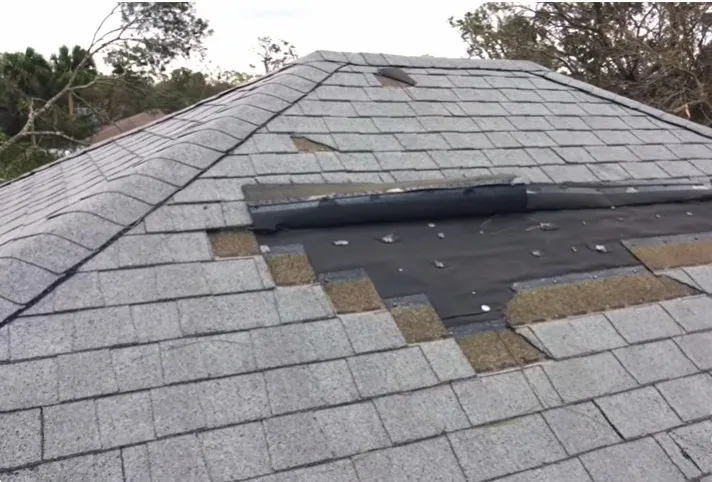
- Photograph every slope of the roof from the ground, plus close-ups of missing shingles, lifted shingles, cracked tile, damaged flashing, dented vents, and damaged gutters
- Photograph interior damage: water stains, wet insulation, damaged belongings
- Use your phone’s timestamp, and save everything to cloud backup immediately
- Note the date and time of the storm event
- If you have pre-storm photos (from a prior inspection, a real estate listing, or even Google Street View), save those too — they defeat “pre-existing damage” arguments
Insurers increasingly verify roof condition with aerial and satellite imagery. Your on-the-ground photos, taken close in time to the event, are your counterweight.
Step 2: Read Your Policy Before You Call
Pull out your declarations page and know three things before you dial:
- Your hurricane/windstorm deductible (usually a percentage, not a flat amount)
- Whether your roof is covered at replacement cost (RCV) or actual cash value (ACV) — many Florida policies now settle older roofs at ACV, which subtracts depreciation and can leave a big gap
- Any roof-surface endorsements, exclusions, or cosmetic-damage limitations
When you call, ask the representative directly: what is my applicable deductible, is my roof on RCV or ACV, and what is the reporting deadline for this claim? Write down the claim number, the adjuster’s name, and the date and time of the call.
Step 3: File the Claim Promptly
Call your insurer’s claims line as soon as practical after discovering the damage — ideally within 48 hours. Have your policy number, the date of the storm, and a clear description of the damage ready. Under Florida law, insurers must acknowledge your claim within 14 days and reach a coverage decision within 90 days, so the clock starts working in your favor once you file.
One judgment call: if the damage is minor and close to your deductible amount, think carefully. Florida law restricts insurers from non-renewing you over a single claim, but a pattern of small claims can affect your insurability and future premiums. Sometimes paying for a small repair out of pocket is the smarter long-term move.
Step 4: Mitigate Further Damage (It’s Your Duty)
Florida policies require you to take reasonable steps to prevent additional damage after a loss — emergency tarping, for example. Most policies cover emergency mitigation as a separate line item, and failing to mitigate can actually be used to reduce your settlement. Get a tarp on exposed areas fast, keep every receipt, and photograph the temporary repairs. Do not make permanent repairs before the adjuster inspects — that destroys the evidence your claim depends on.
Step 5: Get a Professional Roof Inspection
This is the step most homeowners skip, and it’s the one that matters most. An insurance adjuster works for the insurance company. A roofer works for you.
A thorough contractor inspection identifies damage adjusters frequently miss or undervalue: bruised shingles that look intact from the ground but have lost granule adhesion, compromised nail seals that will fail in the next storm, damaged underlayment beneath intact-looking surfaces, and decking issues only visible on close inspection. A written assessment with photos, measurements, and a detailed scope gives you an independent record — and becomes essential evidence if you need a supplemental claim or want to dispute the adjuster’s numbers. That’s why choosing a licensed Riverview roofer for this inspection matters — a detailed professional assessment carries far more weight with insurers.
Have this inspection done before the adjuster’s visit if at all possible.
Step 6: Meet the Adjuster — With Your Roofer Present
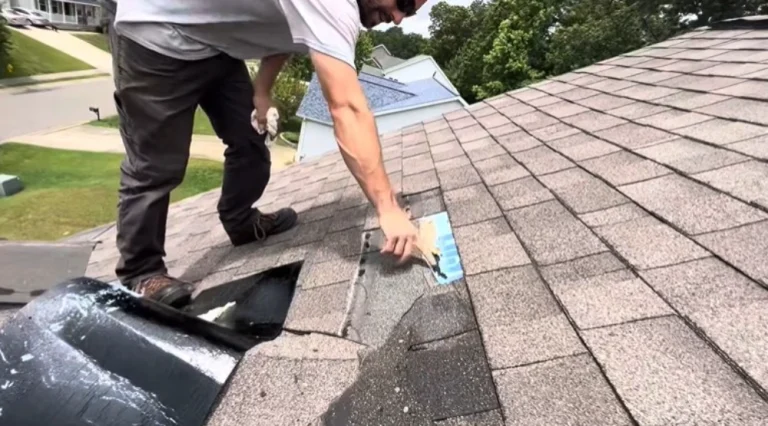
Whenever possible, schedule the adjuster visit at the same time as your contractor’s inspection. Walk the adjuster through all documented damage in a logical sequence, roof first, then interior. Your roofer can point out damage that isn’t obvious from the ground — lifted flashing, compromised seals, hail bruising — and document it in real time.
A few things to know:
- Be cooperative but thorough. If the adjuster only does a ground-level or drone review, note that in your records — remote assessments frequently miss close-up damage.
- Review the estimate line by line. Compare it against your contractor’s estimate. For a sense of typical numbers, see our 2026 guide to roof replacement cost in Riverview FL. Common gaps: underestimated square footage, lower-grade materials than what’s installed, missing code-required upgrades (drip edge, underlayment, re-nailing per Florida Building Code), and omitted components like pipe boots or ridge vent.
- Supplements are normal. If the insurer’s number falls short, your contractor can submit a supplemental claim with documentation showing the specific gaps. This is a routine part of the process, not a confrontation.
- Never sign an Assignment of Benefits (AOB) under pressure. Florida’s 2022 reforms restricted AOB abuse, but aggressive contractors still use it to lock homeowners in. Never sign anything at your door after a storm. A reputable roofer gives you time to review everything.
- Never let anyone “waive” or “eat” your deductible. That’s insurance fraud, and it can void your claim.
Common Mistakes That Cost Florida Homeowners
- Accepting the first estimate without review. Initial estimates frequently come in low. Always compare against an independent contractor estimate.
- Making permanent repairs before the adjuster visit. This eliminates your evidence.
- Forgetting interior damage. Water stains, wet insulation, and damaged personal property are covered too — but only if documented and reported.
- Filing for damage below your deductible. You get a claim on your history and no payout.
- Waiting too long. Memories fade, damage worsens, and deadlines pass.
What If Your Claim Is Denied?
Request a detailed written explanation citing the specific policy language. Common denial reasons include the insurer classifying damage as wear-and-tear rather than storm-related, or gaps in documentation. You can appeal with additional contractor evidence, request a re-inspection, or consult a licensed public adjuster (they typically charge 10–20% of the settlement, so weigh the cost) or an attorney for larger disputes.
FAQs
How long do I have to file a roof claim in Florida?
Florida law provides a multi-year window for reporting property claims, but file within days, not months. Early filing gets you ahead of the post-storm adjuster backlog and prevents further damage from complicating your case.
Will filing a claim raise my rates or get me dropped?
Florida law restricts non-renewal based on a single claim, but insurers can adjust premiums and may non-renew for patterns of claims. This is why the “is it worth filing?” math in Step 3 matters.
Should I hire a public adjuster?
For large or complex claims with a big gap between estimates, a public adjuster can help. For straightforward claims where your roofer is experienced with insurance coordination, a supplemental claim through your contractor usually comes first.
Storm damage on your roof? Call us any time.
We’ll inspect the damage, document everything properly, and stand with you through the adjuster visit — so nothing legitimate gets missed. Serving Riverview, Brandon, Valrico, Gibsonton, Apollo Beach, and Ruskin.
Riverview FL Roofing Contractor | 10517 Riverview Dr, Riverview, FL 33578