Riverview Homeowner Guide
A step-by-step vetting checklist — license lookups, insurance checks, estimates, and the storm-chaser red flags Tampa Bay homeowners keep missing.
9 min read
A summer storm rolls through Riverview, and two days later someone knocks on your door. Nice truck, good price, and he can start Monday — but only if you sign today. He says he’s licensed and insured. Here’s the thing: roofing is one of Florida’s most common industries for unlicensed contracting, and Hillsborough County takes the worst of it every hurricane season. A bad hire means paying twice — once to the guy who vanished, once to the roofer who fixes his mess. This guide shows you how to find a licensed roofer in Riverview, FL the right way: run a real license check through the state, verify what insurance paperwork actually proves, compare estimates without getting played, and spot the storm-chaser red flags.
Why Riverview Homeowners Get Targeted
Hurricane season in Florida runs June 1 through November 30, and the Tampa Bay area sits right in the strike zone. When a storm clips Riverview — or even just dumps hail and wind on one side of town — out-of-area operators roll in within days, working damaged neighborhoods and disappearing before the permits they never pulled become anyone’s problem. After a storm, everyone wants the problem fixed fast — and fast is exactly when verification gets skipped. Florida requires roofing contractors to hold a DBPR license. It exists for one reason: so you can check it before money changes hands.
Step 1: Get the License Number — Then Check It Yourself
Any roofer worth hiring gives you their license number without flinching. Hesitation, deflection, or “we work under another company’s license”? Stop right there — a Florida roofing license is tied to a specific person and business, and borrowing someone else’s is a violation in itself.
Once you have the number, run it through the state’s own lookup:
- Go to myfloridalicense.com and choose “Verify a Licensee.”
- Search by license number, business name, or the qualifier’s name.
- Confirm the status reads Current/Active. Anything else — Delinquent, Suspended, Null and Void, Revoked — means they aren’t authorized to contract for roofing work.
- Check for disciplinary actions or complaints on the record. A pattern of them should end the conversation.
- Confirm the license type matches the work. Not every Florida roofing license starts with the same letters.
CCC vs. RC: what those letters mean
- CCC — Certified Roofing Contractor. Licensed at the state level; works anywhere in Florida.
- RC — Registered Roofing Contractor. Registered through local jurisdictions.
Neither is automatically better — what matters is that the license is active, covers roofing, and is valid for your address. If anything is unclear, call the DBPR at (850) 487-1395 or ask the Hillsborough County building department.
Check both the person and the business — Florida requires a licensed individual to qualify the business doing the work. If the contract name doesn’t match the license record, resolve that in writing first. A general contractor’s license doesn’t automatically cover roofing.
Step 2: Verify Insurance — Don’t Accept a Photocopy
A license says the roofer cleared the state’s bar; insurance says you’re protected if something goes wrong:
- General liability — covers damage to your property during the job.
- Workers’ compensation — covers crew injuries. If an uninsured worker gets hurt on your roof, you can get pulled into the liability mess.
Most homeowners accept a photocopied certificate at face value — but certificates can be faked, expired, or canceled the week after printing. Call the carrier listed and confirm the policy is current. A real roofer expects this and hands over the number without argument.
Watch the exemption wrinkle: it may cover a sole proprietor with no employees, never a four-man crew. Make sure coverage matches the crew on your roof.
No current, verifiable insurance? Walk away. No price is low enough to make up for an injury claim or a botched job you can’t collect on.
Step 3: Get It in Writing — Every Estimate, Every Time
A handshake quote isn’t a quote — it’s a story that changes when the bill arrives. Insist every roofer puts the proposal in writing with the same details, so you’re comparing actual work, not sales pitch.
A complete written estimate should spell out:
- Scope of work — exactly which roof sections are included (main roof, garage, porch, any separate structures).
- Materials — manufacturer, product line, and color, not just “architectural shingles.”
- Tear-off and disposal — what’s being removed, how many existing layers, and who hauls it away.
- Underlayment, flashing, and ventilation — the parts you can’t see from the ground, which is why they need to be in writing.
- Permits — who pulls them and which fees are included. In Hillsborough County, legitimate roof work gets permitted; a roofer who suggests skipping it is telling you who they are.
- Payment schedule — what you pay, when, and what triggers each payment. Never pay in full before work starts.
- Timeline — start date, expected duration, and how weather or material delays get handled.
- Warranties — the manufacturer’s and the contractor’s workmanship warranties are two different things from two issuers. Get both in writing, with exclusions and the claim process.
Line up two or three estimates and compare scope first, price second — the cheapest bid usually describes less work. One estimate dramatically lower than the rest? Ask the roofer to explain the gap in writing. A good contractor can; a bad one gets uncomfortable.
If your home took hail damage, get the written estimate before you file your roof insurance claim — the scope on paper protects you in both conversations.
Confused by something a roofer told you? Talk it through before you sign — a five-minute conversation now beats a five-figure mistake later.
Step 4: The Questions to Ask Before You Sign
License checked, insurance verified, estimates in hand. Ask these before anything gets signed:
- What is your Florida roofing license number, and what name and business is it under?
- Will you pull all required permits, and are the fees in this estimate?
- Who will be on my roof — your employees or a subcontracted crew? Who supervises them?
- Can I have your insurance carrier’s name and number to verify coverage directly?
- What exactly is excluded from this estimate?
- How do you handle unexpected damage under the old roofing — like rotted decking? Who authorizes extra work, and at what price?
- What is the payment schedule, and what triggers each payment?
- Can I see both the manufacturer warranty and your workmanship warranty documents?
A legitimate roofer answers these without dodging. Vague answers, irritation, or “don’t worry about that” — believe what you’re seeing.
The Florida 25% Rule — Ask About It Before You Approve a Repair
One thing most vetting guides skip: Florida’s 25% rule. If repairs touch more than 25% of your roof’s total area within 12 months, the code may require bringing the affected portion — sometimes the whole roof — up to current Florida Building Code. A patch job can legally become a full replacement.
In 2022, Senate Bill 4-D eased the rule for newer roofs: permitted under the 2007 Florida Building Code or later (roughly on or after March 1, 2009), only the repaired section generally needs to meet current code, even past 25%. Older, pre-2009 roofs still fall under the stricter version.
The 25% rule is where shady estimates hide — a roofer pushing full replacement should explain in writing how it applies to your measured roof area and permit date. Pull your permit history from the Hillsborough County building department first. General education, not legal advice: confirm specifics with the county or a qualified local professional.
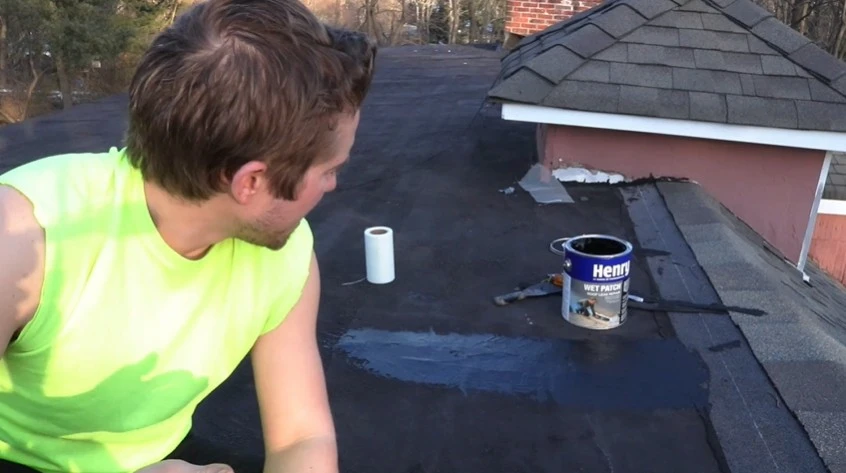
Flat roofs are often divided into sections, so the math differs from a shingle roof — one more reason estimates should show measured areas, not guesses. If a repair is tipping toward replacement, our breakdown of roof replacement costs in Riverview helps sanity-check the numbers.
Frequently Asked Questions
How do I check if a roofer is licensed in Florida?
Go to myfloridalicense.com, choose “Verify a Licensee,” and search by license number, name, or business name. Confirm Current/Active status, a roofing license type, and no worrying disciplinary actions — for both the individual and the business.
What’s the difference between a CCC and an RC roofing license?
CCC is a Certified Roofing Contractor — licensed statewide. RC is a Registered Roofing Contractor — registered locally. Both are legitimate; what matters is an active license valid for roofing at your address.
Should I hire a roofer who knocks on my door after a storm?
Be cautious — classic storm-chaser pattern. Still verify the license on myfloridalicense.com, confirm insurance with the carrier directly, get a written estimate, and never sign on the spot.
How much deposit should I pay a roofer upfront?
A modest deposit for scheduling and materials is normal. Be wary of half or full payment before work begins — one of Florida’s most reported contractor-fraud patterns. Tie every payment to a milestone in a written contract.
Do Florida roofers have to carry workers’ compensation insurance?
Generally yes, or a valid exemption — but exemptions are narrow, usually the owner only, not the crew. Verify with the carrier directly, not from a photocopied certificate.
What is Florida’s 25% rule?
If repairs affect more than 25% of your roof area within 12 months, the work may have to meet current Florida Building Code — turning a repair into a replacement. A 2022 law (SB 4-D) eased this for roofs permitted on or after March 1, 2009. Confirm with the Hillsborough County building department.
What should I do if a contractor can’t provide a license number?
Walk away. Anyone contracting for roofing work in Florida must hold a license, and a legitimate contractor provides the number immediately. “We work under another company’s license” and “it’s being renewed” are not acceptable answers.
Don’t sign anything you’re unsure about. If a quote, a contract, or a door-knocker’s pitch doesn’t sit right, talk it through first. We’re here to help Riverview homeowners ask the right questions.
Open 24/7